 I took a walk around my neighborhood recently, and found myself holding a few distinct thoughts:
First, I don’t like decorations built for jump-scares. Real life holds enough genuine terror right now; I certainly don't need manufactured fright.
Second, masks worn for fun are a stark reminder of the heavy, invisible emotional masks so many adopted people wear every day just to keep things together.
And third, every glowing jack-o'-lantern on a front porch had to lose what was inside before anyone can admire its shine.
While Halloween can offer a momentary escape, and it is undeniably fun for many children, I’ve never really been a Halloween person. Even as a child, I wondered why anyone would want to be scared on purpose. I never enjoyed horror movies, haunted hayrides, or kids jumping out from behind bushes in mummy masks.
As an adult living in our current world, manufactured fear feels even more unnecessary. Real life is complicated, unpredictable, and vulnerable enough. We don't need jump-scares when navigating everyday survival already takes so much out of us.
Then there are masks worn for fun and masks worn for emotional survival. For so many adopted children and youth, masks are not only for October 31st; there are emotional and identity masks that are necessary to navigate a world that so often does not see the complexity of separation from family of origin and enfoldment into a family of experience.
This all brings me back to jack-o-lanterns.
Walk down almost any street in October, and you will see porches lined with jack-o'-lanterns. Some with a snaggle-toothed grin; others wear a look of shock; and still others are carved with a look of "beware." Folks stop and say, "Look at how that one glows."
We love the glow of the finished design. But we rarely talk about what had to happen first.
As a kid, we carved pumpkins. First we picked out the perfect one, and once the top was open we carefully cleared what grew naturally on the inside—all the tangled seeds and stuff—got scraped away so we could carve faces into our pumpkins. The last step was carefully placing a candle on the inside, shutting the lights, and watching it glow. It was a joyful feeling of accomplishment.
But what about the pumpkin before it was cleaned out and made to glow?
For transracially adopted children and youth, life can feel remarkably like that pumpkin.
What Gets Hollowed Out
The symbolism is simple yet stark. Something that is whole (the pumpkin) has to have the center removed for something to glow (the jack-o'-lantern). Imagine that the child entrusted to you is that pumpkin having to be hollowed out from the core to glow as something new. Everyone loves to see the final glowing product, but folks don’t always see or understand what had to be hollowed out and the deep, lasting impact of loss.
I know that impact because I lived it. Nobody handed me a knife and told me to scrape away my core; I simply learned by the vibes of the space. I learned that my questions about my origins, or racial differences, and my confusion made the people I loved uncomfortable. So I did what so many adopted kids do: I tried to scoop out the tangled, messy parts of myself and set them aside. I let myself be hollowed out so the candle someone else handed me fit inside.
 When the Hollow Requires Masks
Once my insides were cleared out and off to the side, the emptiness brought emotion, confusion, and “dramatics” that no one understood or wanted. I was feeling the ache of not knowing why I was not still with my mother of origin and that something surely was wrong with me. I had deep questions about where I came from but felt there was no way to get at these conversations; I didn’t have the language.
And then, there was being a different race than my family. There was a constant looking for mirrors and a deep sense of not belonging. I loved my family, and while I wanted to be close to them, I never really wanted to look like them. I was struggling with wishing the outside world would connect us as a family while wishing my skin was darker so folks knew I was Black.
All of this made being my whole, true self impossible, and I started wearing various masks. Some to avoid being further labeled a “crybaby” or “attention-seeking.” Others to make sure I could fit in with a majority white environment.
The net effect of performativeness with a healthy side of attitude and self-protection was sheer exhaustion.
The Bridge: From the Empty Shell to the Core of Understanding
That exhaustion is what so many children and youth carry.
When you as parents see attitude, silence, hyper-compliance, or sudden emotional outbursts, you are not likely looking at bad behavior or ingratitude. You are looking at the sheer energy it takes to keep a hollow shell standing. You are seeing a child who has spent all day making sure the light fits inside for everyone else's comfort.
As parents, you cannot simply tell your children to "take off the mask." A mask is armor. Nobody puts down armor until they know the room is genuinely safe.
If you want the young people entrusted to you to stay whole—to keep their seeds, their tangled pulp, and their roots intact—your job is not to admire how brightly they glow for you and everyone else. Your job is to create a home where being hollowed out is never the price of belonging.
1. Pause to Remember Your Own Mask
Has anything had to be hollowed out in you? And think back to a moment—either in your own youth or recently—when you felt you had to put on a mask to keep the peace or protect someone else’s comfort. What was happening in your chest and stomach when you forced that face into place? What made the mask feel necessary? And how did your breath feel when you could finally take it off? Grounding yourself in your own memory of self-protection will help you meet your child's defenses with reverence and curiosity rather than frustration.
2. Welcome the Messy Pulp
The questions adopted kids carry about race, birth origins, and identity are never neat. They are contradictory, raw, and sometimes painful. When those moments surface, resist the urge to tidy them up with an immediate silver lining simply because the silence feels heavy. Ground your feet to the floor. Take a steady breath. Let the room hold the discomfort without rushing to fix it.
3. Practice a "Feelings Forecast"
Milestones, holidays, and family gatherings dramatically ramp up performance pressure. Before stepping into group spaces, check in together:
"On a scale from 1 to 10, how much energy do you have for being 'on' today? What signal can we share if you need us to help you step away?"
Show them through your actions that their internal safety matters far more than presenting a picture-perfect family to the crowd.
Not all children and youth experience adoption and differences of race in the same way, but recognizing some of the layers and doing the deep work can be a bridge that makes home a place where children never have to scrape away who they are just to light up the room. Every part of them—the joy, the grief, the questions, and the silence—belongs here intact.
That kind of wholeness takes root when children and families are surrounded by people who truly get it.
That is the beauty and hope at the heart of Together on the Journey (TRJ). Young people don't have to explain their hair, their skin, or their family structure. They don't have to code-switch or put on a mask. They get to see racial and cultural mirrors all around them, and experience the pure, uninhibited joy of just being kids.
For parents, this means you don't have to carry the weight alone or pretend you have all the answers. You get to breathe, learn alongside others on the path, and watch what happens when your children are given permission to set their armor down.
If you would like to help ensure that more transracial adoptive families and youth have access to this vital, transformative space, consider making a donation today to support our camp scholarships and family programming. Every contribution helps us build a circle where no child ever has to mask to belong. Contribute Now
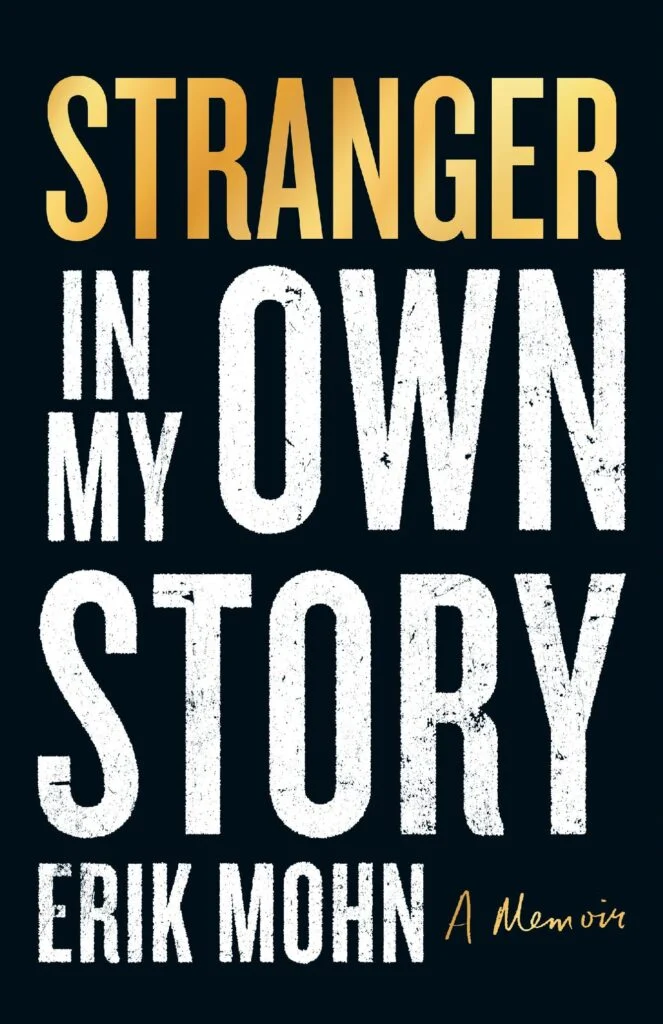 What happens when you grow up loved, yet surrounded by a world where no one looks like you? In his debut memoir, Stranger in My Own Story, author Erik Mohn delves into the nuanced, emotionally complex space of growing up as a Black boy raised by a white adoptive family.
 Pulitzer Prize–winning investigative journalist, creator of